Frequently Asked Questions
The most-asked questions about natural disasters.
What exactly counts as a 'natural disaster' in this context?
A natural disaster is a severe, often sudden event driven by geological, meteorological, or hydrological processes—such as earthquakes, hurricanes, volcanic eruptions, or floods—that overwhelms a community's ability to cope without outside aid. It is distinguished from a 'natural hazard' (the event itself) by the actual damage and human impact it produces.
What are the main 'characters' or categories I should know?
The core cast includes tectonic events (earthquakes, tsunamis, volcanic eruptions), atmospheric events (hurricanes, tornadoes, blizzards), and hydrological/geomorphic events (floods, landslides, wildfires). Each category has its own drivers, warning signs, and typical damage patterns.
Who are the key figures fans should recognize?
Prominent names span seismologists like Charles Richter and Thomas Jordan, hurricane researchers such as Dr. Joseph Shapiro, and disaster-response leaders like FEMA directors. On the human side, survivors and first responders from events like the 2004 Indian Ocean tsunami and Hurricane Katrina have become widely known public figures.
Where should a newcomer start learning about natural disasters?
A solid entry point is the USGS Earthquake Hazards Program and NOAA's National Hurricane Center for primary data, paired with a general geology or meteorology textbook for underlying mechanics. Documentaries like 'Chasing Coral' or the BBC's 'Earth: One Year' also provide accessible visual overviews.
What is the single most-deadly natural disaster in recorded history?
The 1556 Shaanxi earthquake in China remains the deadliest, with an estimated 830,000 fatalities, though exact figures are difficult to verify. In the modern era, the 2004 Indian Ocean tsunami (roughly 230,000 dead across 14 countries) is the most lethal single event.
How are these events measured or rated?
Earthquakes use the moment magnitude scale (Mw), hurricanes the Saffir-Simpson 1–5 category system, and floods are often described by depth and flow rate rather than a single number. Volcanic activity is tracked with the Volcanic Alert Level system (Green to Red), and tornadoes use the Enhanced Fujita scale (EF0–EF5).
Which natural disaster happens most frequently worldwide?
Floods are the most common type, affecting an estimated 200 million people each year across every continent. Lightning strikes and small landslides are even more frequent locally but rarely cross the threshold into 'disaster' scale.
What makes a natural disaster 'notable' in the way fans discuss it?
Notability usually comes from a combination of extreme magnitude, unprecedented location, cascading secondary effects (like the 2011 Tōhoku quake triggering a tsunami and nuclear meltdown), or a stark failure in warning and response. These events tend to reshape public policy and scientific research for decades.
How do natural disasters differ from man-made catastrophes?
The key distinction is the initiating cause: natural disasters originate in Earth's physical systems, whereas man-made catastrophes stem from human error, industrial failure, or intentional action. In practice, the two often overlap, as building codes, land-use decisions, and climate change amplify the impact of a natural trigger.
What is one key fact most newcomers don't realize?
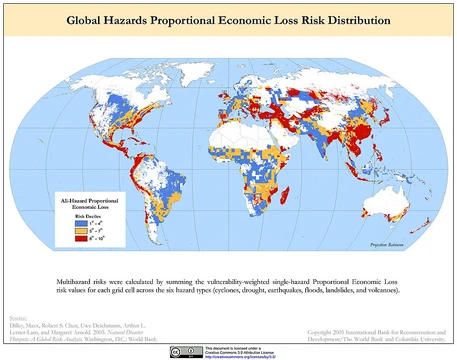
The vast majority of natural-disaster deaths occur in low- and middle-income countries, not in the regions where the events are most dramatic or best documented. A moderate earthquake or cyclone in a densely populated, under-resourced area can kill far more people than a catastrophic event in a wealthy nation with robust early-warning systems.