1755 Lisbon earthquake
Earthquake, tsunami, and fire destroyed Lisbon and birthed modern seismology.

Elliott Bledsoe from Brisbane, Australia · CC BY 2.0
In combination with subsequent fires and a tsunami, the earthquake almost completely destroyed Lisbon and adjoining areas, profoundly disrupting the Portuguese Empire and inspiring major developments in theodicy among European Enlightenment philosophers. As the first earthquake studied scientifically for its effects over a large area, it led to the birth of modern seismology and earthquake engineering.
- magnitude
- 8.5–9.0 on the moment magnitude scale
Lore & Background
The earthquake struck on All Saints' Day, lasting from three and a half to six minutes and causing fissures 5 metres wide in the city center. Survivors rushed to the docks, where the sea receded, revealing mud and shipwrecks. Approximately 40 minutes later, a tsunami engulfed the harbor and downtown, rushing up the Tagus river, followed by two more waves. Candles lit for the feast started a firestorm that burned for hours, asphyxiating people up to 30 metres from the blaze. Lisbon was not alone: the Algarve, Madeira, the Azores, and towns in North Africa and Spain suffered destruction from the earthquake or tsunami. Shocks were felt across Europe to Finland and North Africa, and tsunamis reached Martinique, Barbados, Cornwall, and Ireland.
Reader's Guide
It also profoundly influenced European Enlightenment thought, particularly theodicy, as philosophers grappled with the problem of natural evil. The disaster accentuated political tensions in Portugal and disrupted the Portuguese Empire. The royal family survived, and the Marquis of Pombal organized relief, famously ordering the burial of the dead at sea to prevent disease. The event remains a landmark in both natural and intellectual history.
Did You Know?
- The earthquake lasted from three and a half to six minutes, causing fissures 5 metres wide in Lisbon's city center.
The Hour of Ruin: Quake, Tsunami, and Fire
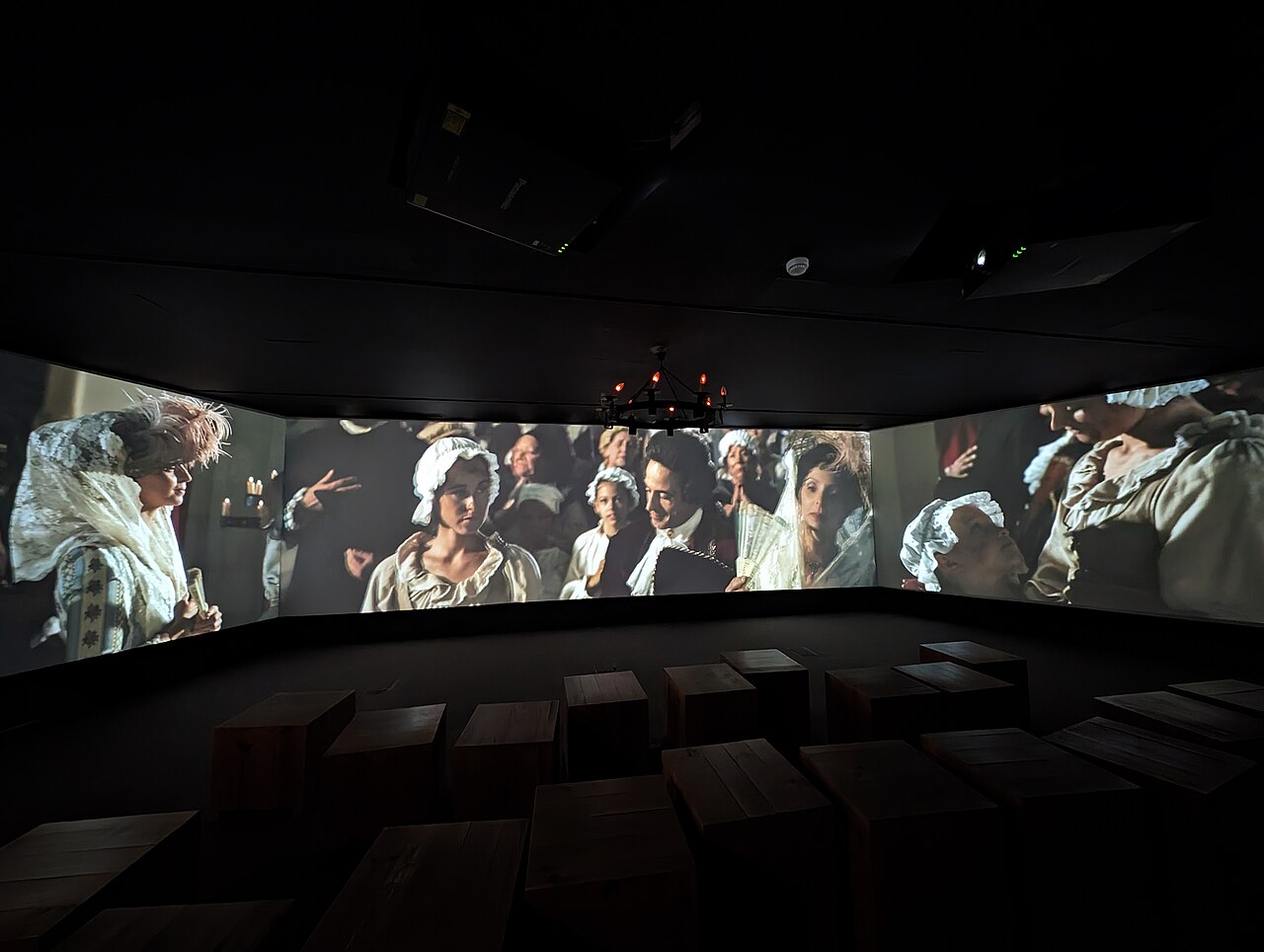
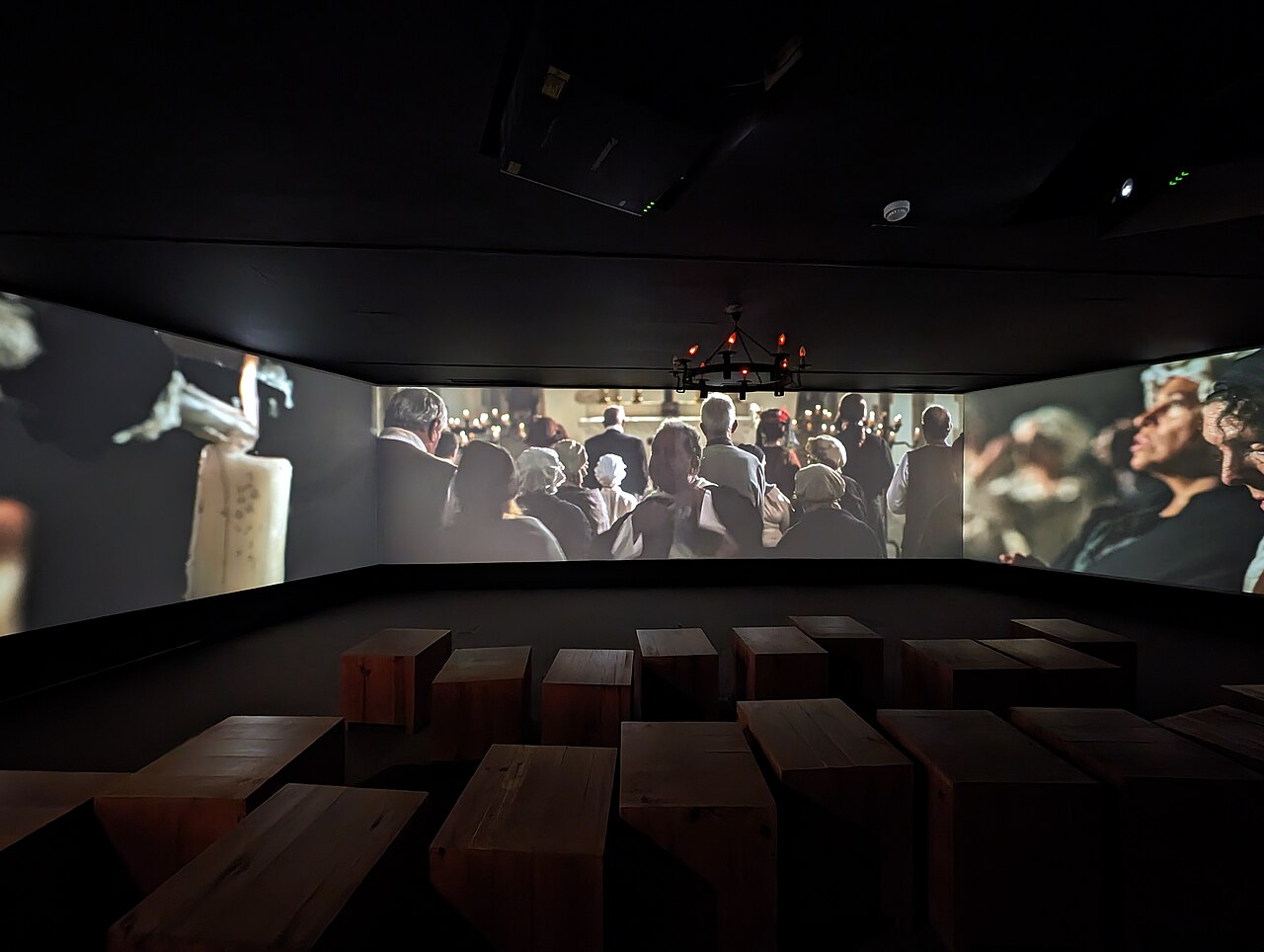
The morning of All Saints' Day, 1 November 1755, brought a sequence of destruction that unfolded over roughly an hour. At approximately 09:40, the ground beneath Lisbon shuddered for between three and a half and six minutes, tearing open fissures as wide as five metres through the city's heart. Frightened residents fled toward the open waterfront, only to witness the Tagus pull back and expose a vast plain of mud strewn with broken cargo and wrecked hulls. Roughly forty minutes after the initial shaking ceased, the sea returned with terrifying force, surging up the river and sweeping through the harbor and downtown so rapidly that riders on horseback had to gallop for their lives. Two additional waves followed. Meanwhile, the thousands of candles lit in churches and homes for the All Saints' observance toppled in the shaking, igniting a firestorm that raged for hours and suffocated victims as far as thirty metres from the flames. The combined assault obliterated roughly 85 percent of the city's structures, including the Ópera do Tejo, a grand opera house that had opened just seven months earlier.
A Tremor Felt Across the World
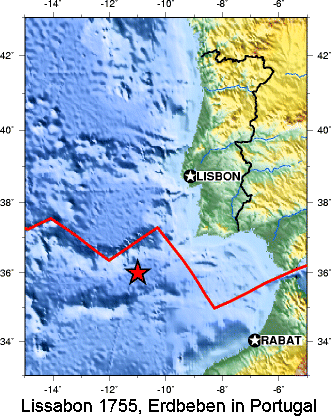
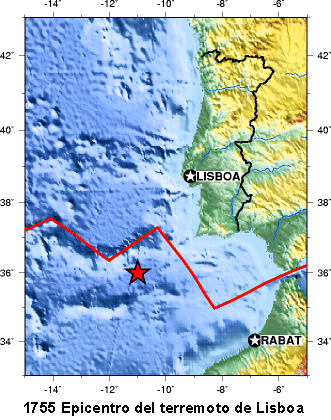
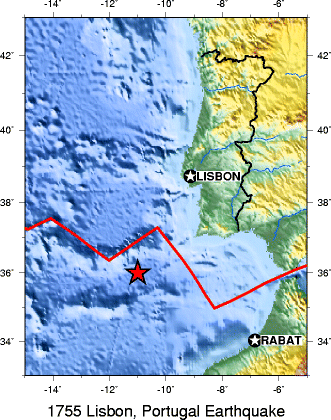
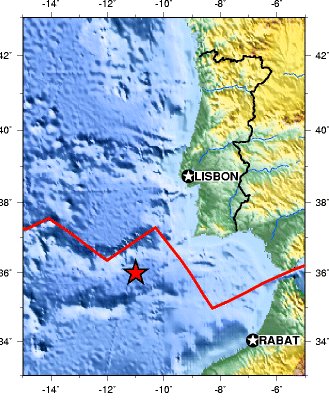
The rupture that unleashed the catastrophe originated far from any coastline. Seismologists place the epicenter in the open Atlantic, roughly two hundred kilometres west-southwest of Cape St. Vincent and some two hundred and ninety kilometres southwest of Lisbon, with a magnitude of at least 7.7. Yet the reach of the event was astonishingly global. Shocks were recorded across Europe as far north as Finland and across the Mediterranean into North Africa, with some contemporary accounts extending the tremor to Greenland and the Caribbean. Tsunami waves towering up to twenty metres battered the North African shore, while smaller surges of around three metres lapped the southern coast of England at Cornwall. In Ireland, the sea partially demolished the Spanish Arch in Galway and, in County Clare, washed away a low-lying isthmus, leaving Aughinish Island newly isolated. Across the Atlantic, waves struck Martinique and Barbados, and 2015 research confirmed that the surge also reached the Brazilian coast. In 1992, a deep-sea survey along the Azores–Gibraltar Transform Fault identified a fifty-kilometre thrust fault with a vertical slip exceeding one kilometre, likely the structure responsible for the primary tectonic rupture.
Lives Lost and a Heritage Erased
The human cost was staggering. Lisbon's population at the time stood at roughly two hundred thousand, and between thirty and forty thousand residents perished in the quake, the fires, and the tsunami. An additional ten thousand lives were likely lost in Morocco, bringing the combined toll across Portugal, Spain, and Morocco to somewhere between forty and fifty thousand. The cultural devastation was equally profound. Eighty-five percent of the city's buildings were lost, and among them went some of Portugal's most treasured architectural heritage: the majority of surviving examples of the ornate Manueline style from the sixteenth century, along with renowned palaces and libraries. The Royal Ribeira Palace, perched beside the Tagus, was among the structures consumed. Beyond Lisbon, the Algarve's coastal towns were nearly all heavily damaged, with waves cresting over the walls of Lagos and fortresses reduced to rubble, while only Faro escaped serious harm thanks to the natural barrier of the Ria Formosa. In the Azores, the sea pushed roughly one hundred and fifty metres inland, devastating nearly every port. Even the inland town of Covilhã, nestled near the Serra da Estrela range, saw its castle walls and great towers crumble.
The Shock That Forged Modern Science and Philosophy
Beyond the immediate ruin, the 1755 catastrophe rippled into the intellectual and political life of Europe, reshaping entire fields of thought. For the Portuguese state, the disaster sharpened existing political tensions and dealt a severe blow to the cohesion of the Portuguese Empire, whose overseas holdings from Africa to Brazil had all felt the tremor or the wave. Across the continent, Enlightenment philosophers seized upon the event as a philosophical challenge: how could a benevolent God permit such indiscriminate suffering on a holy day? The question drove major advances in theodicy, the branch of theology concerned with justifying divine goodness amid evil. On the empirical side, the earthquake marked a watershed. Because its effects could be documented across such a vast area—from Finland to the Caribbean, from the Azores to Brazil—scholars for the first time attempted a systematic, scientific study of a seismic event and its consequences. That effort is widely regarded as the birth of modern seismology and earthquake engineering. It was, notably, only the third major earthquake to strike Lisbon, following earlier shocks in 1356 and 1531, but the first examined with the rigor of natural philosophy.
Gallery
Frequently Asked Questions
What are 1755 Lisbon earthquake's powers/role?
The quake registered between 8.5 and 9.0 on the moment magnitude scale and immediately triggered a massive tsunami along the coast. Together with the raging fires that followed, these three forces of destruction nearly obliterated Lisbon and the surrounding region.
Why is 1755 Lisbon earthquake important?
It was the first earthquake ever investigated scientifically across such a wide geographic area, effectively giving birth to modern seismology and earthquake engineering. The disaster also shook Enlightenment philosophers, igniting major debates on theodicy and the problem of evil in a supposedly benevolent world.
More in Natural Disasters 1-15
Spotted an error? Know more?
This is a living reference — every entry is fact-audited, and reader corrections feed straight into our audit queue. Suggest an edit · See this site's audit record