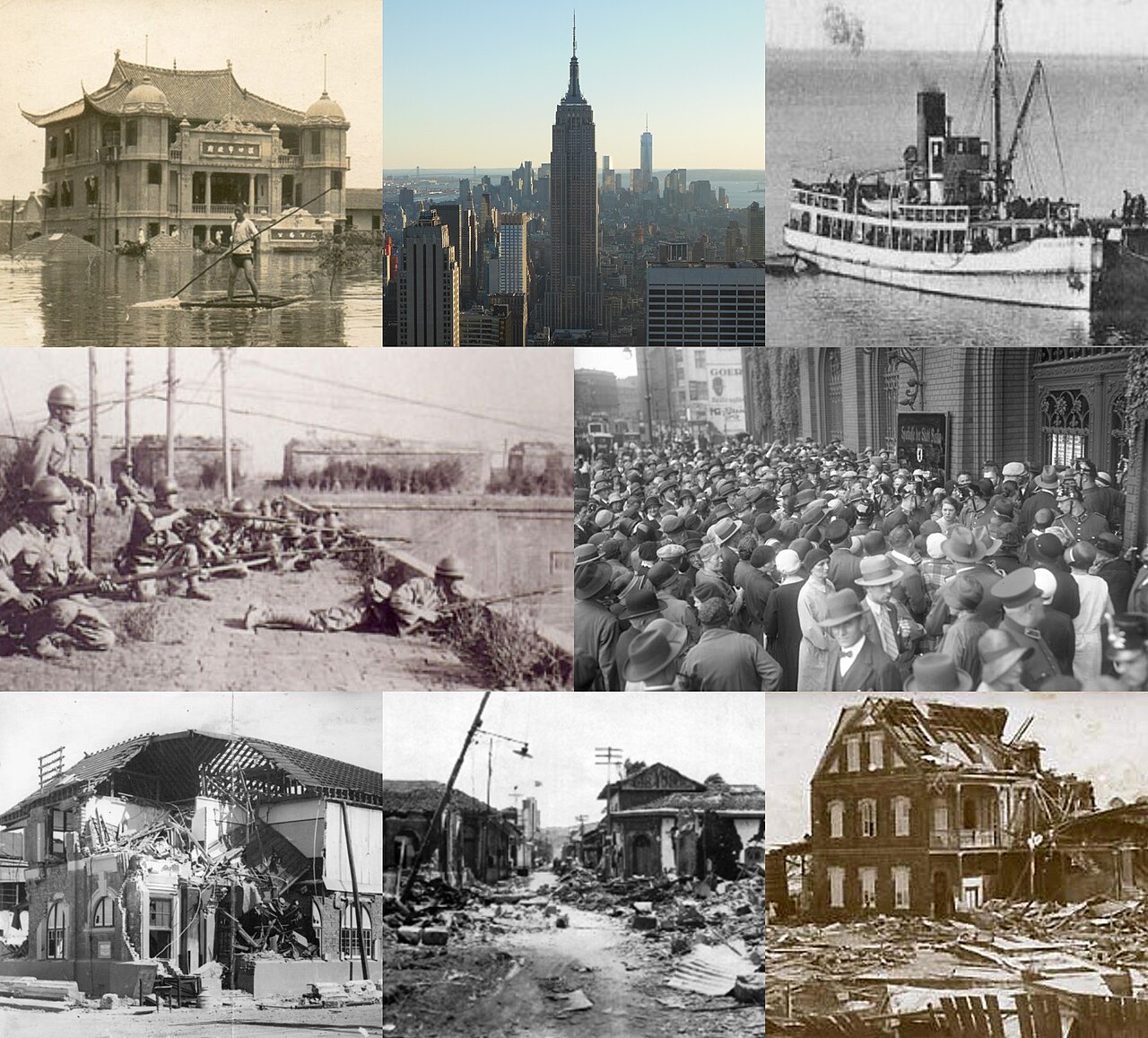
1931 China floods

From a variety of images credited above. · CC0
- type
- Natural disaster
- location
- China (primarily Anhui, Hubei, Hunan, Jiangsu, Zhejiang, Jiangxi, Henan, Shandong)
- people_affected
- Government estimate 25 million; historians suggest up to 53 million
Lore & Background
The water flowing through the Yangtze reached its highest level since record-keeping began in the mid-nineteenth century, and some rivers did not return to normal until November. The flood inundated major cities including Wuhan and Nanjing. The Tanka people, who traditionally live on boats along the Yangtze, suffered greatly. The flood destroyed around 15% of wheat and rice crops across the Yangtze Valley, with higher proportions in affected areas. The disaster caused an economic shock, rapid price rises, and famine, leading people to eat tree bark, weeds, and earth; some sold their children, and others resorted to cannibalism. Diseases such as cholera, measles, malaria, dysentery, and schistosomiasis swept through refugee populations.
Reader's Guide
The event tested the Kuomintang Government, which established the National Flood Relief Commission under T.V. Soong, employing Chinese and foreign experts including epidemiologist Wu Liande, health minister Liu Ruiheng, public health worker John Grant, and hydraulic engineer Oliver Todd. The League of Nations assisted, and aviators Charles and Anne Lindbergh conducted an aerial survey. Charity came from worldwide, especially overseas Chinese communities; author Pearl Buck wrote short stories to encourage donations. In the wake of the disaster, the government set up organizations such as the Huai River Conservancy Commission, but due to lack of funding and subsequent wars, only small dams were built along the Yangtze. The flood remains widely unknown to the Chinese, as history focused on the civil war, Japanese invasion, and the Great Depression.
Did You Know?
- The flood inundated an area equivalent in size to England and half of Scotland, or the states of New York, New Jersey, and Connecticut combined.
A Perfect Storm of Drought, Snowmelt, and Cyclones
For three years, from 1928 through 1931, China endured a prolonged drought that left the land parched and the rivers diminished. The winter of 1930–31 proved especially brutal, packing the mountainous regions with thick layers of snow and ice. When early spring arrived, that accumulated cold mass melted rapidly, sending torrents of water surging downstream into the middle reaches of the Yangtze just as intense spring rains began to fall. Under normal conditions the region would see three separate peaks of high water across spring, summer, and autumn; in 1931 those peaks merged into one unbroken deluge. By June, residents of low-lying areas had already been driven from their homes. The summer brought an extraordinary surge of cyclonic activity: nine cyclones struck the region in July alone, far exceeding the annual average of two. Four weather stations along the Yangtze recorded monthly rainfall exceeding 600 millimetres. The river's flow reached a peak not matched in its recorded history, which stretches back to the mid-nineteenth century, and even into autumn, additional heavy rains kept water levels elevated, with some rivers not returning to their normal channels until November.
A Flood the Size of a Nation
The sheer geographic footprint of the 1931 inundation defies easy comparison. Roughly 180,000 square kilometres of land were submerged—a landmass on par with England and roughly half of Scotland, or to the combined territories of New York, New Jersey, and Connecticut. The high-water mark recorded at Hankou in Wuhan on 19 August stood sixteen metres above the long-term average, placing the surface more than a metre and a half above the level of the Shanghai Bund. In Chinese the event is remembered as the Jiang-Huai Water Disaster, a name that captures the dual involvement of the Yangtze and Huai river systems. The Yellow River and the Grand Canal were also swept under water. Eight provinces bore the heaviest burden: Anhui, Hubei, Hunan, Jiangsu, Zhejiang, Jiangxi, Henan, and Shandong. Yet the flooding did not stop at those borders. Inundation reached as far south as Guangdong, as far north as Manchuria, and as far west as Sichuan, making this one of the most geographically widespread flood events in modern Chinese history.
Famine, Disease, and a Shattered Population
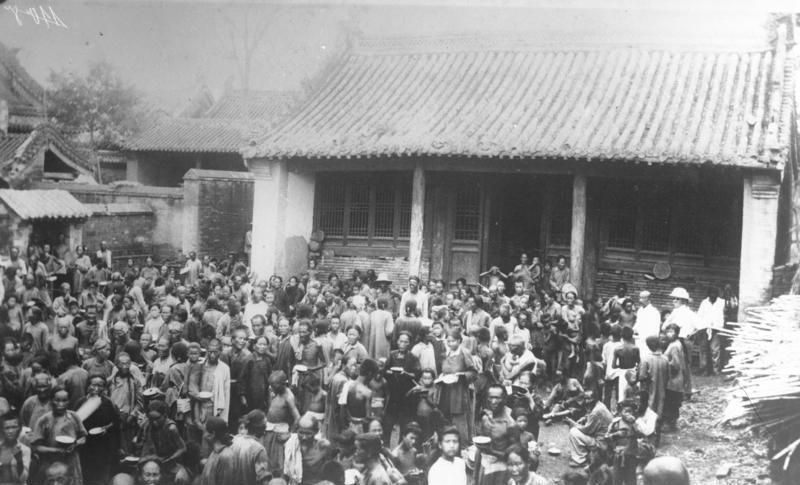
The human cost of the 1931 floods remains one of the most contested figures in disaster history. The contemporary government estimated that 25 million people were affected, while later historians have suggested the true figure may have approached 53 million. A field survey conducted by John Lossing Buck of the University of Nanking found that 150,000 people had drowned in the first hundred days, a number he noted represented less than a quarter of total fatalities. Official reports placed drownings at 140,000 and attributed two million deaths overall to drowning, starvation, and disease. Chinese historians led by Li Wenhai, working from contemporary media records, calculated a toll of 422,420, while some Western sources have cited figures between 3.7 and 4 million. The Tanka people, who traditionally lived on boats along the Yangtze, were among the hardest struck. Beyond the water itself, the destruction of roughly 15 percent of wheat and rice crops across the Yangtze Valley, soaring commodity prices, and the collapse of sanitation in refugee camps triggered famine and epidemics of cholera, measles, malaria, dysentery, and schistosomiasis. A cholera outbreak in May 1932 alone officially claimed 31,974 lives and infected over 100,000 more.
When Cities Drowned — Wuhan and the Gaoyou Breach
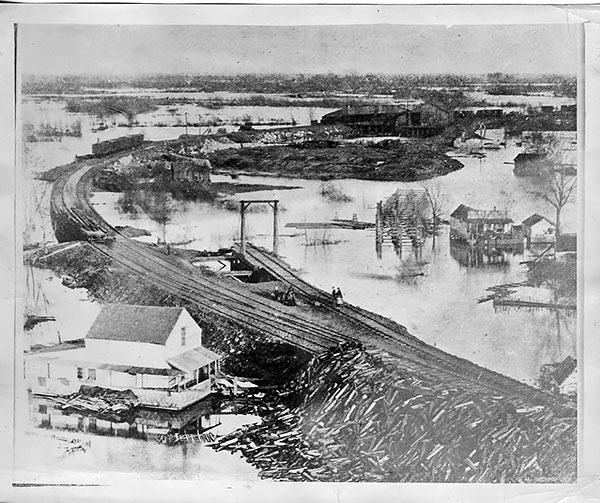
The floods struck urban centres with particular ferocity. In Wuhan, refugees had been streaming into the city since late spring, swelling an already dense population. When the waters finally breached the city's defences in early summer, a catastrophic dike failure at just before six in the morning on 27 July left approximately 782,189 people—both urban residents and rural refugees—homeless. An area of 83 square kilometres was submerged under many feet of water for nearly three months. Because most buildings in the city were only a single storey high, many residents had no means of escape and perished by the tens of thousands. Thirty thousand people huddled on a railway embankment in central Hankou, and with food scarce and sanitation nonexistent, disease spread rapidly among the stranded. Nanjing, the capital of Republican China, also suffered severely. On 25 August, waters rushing through the Grand Canal tore away the dikes near Gaoyou Lake; in Gaoyou County alone, 18,000 people drowned in the immediate aftermath, and another 58,000 succumbed to famine and disease over the following year.
Gallery

Frequently Asked Questions
How many does 1931 China floods affect?
Contemporary Chinese government figures placed the number of affected people at around 25 million, while later historical analyses suggest the figure may have reached 53 million. The sheer scale of displacement made relief efforts nearly impossible and turned a flooding event into a prolonged, multi-provincial famine.
More in Natural Disasters 1-15
Spotted an error? Know more?
This is a living reference — every entry is fact-audited, and reader corrections feed straight into our audit queue. Suggest an edit · See this site's audit record