San Francisco earthquake of 1906
Deadliest earthquake in U.S. history, destroying over 80% of San Francisco.

Edith Irvine · Public domain
The San Francisco earthquake of 1906 was a magnitude 7.9 earthquake that struck the coast of Northern California at 05:12 am Pacific Standard Time on Wednesday, April 18, 1906. It remains the deadliest earthquake in the history of the United States, with more than 3,000 deaths and over 80% of the city destroyed by the quake and subsequent fires. The event is remembered as the greatest loss of life from a natural disaster in California's history and high on the list of worst American disasters.
- date
- April 18, 1906
- magnitude
- 7.9 (moment magnitude scale, with proposed values from 7.7 to 8.3)
- maximum_intensity
- XI (Extreme) on the Modified Mercalli scale
- deaths
- More than 3,000 (official total recognized in 2005)
- surface_displacement
- Maximum observed 20 feet (6 m); geodetic up to 28 feet (8.5 m)
Lore & Background
The earthquake occurred along the San Andreas Fault, a continental transform fault forming part of the boundary between the Pacific plate and the North American plate. A strong foreshock preceded the main shock by about 20 to 25 seconds, and the strong shaking lasted about 42 seconds. The epicenter remains uncertain, with recent analyses supporting an offshore location near San Francisco or San Juan Bautista, though significant uncertainty remains.
Reader's Guide
The 1906 earthquake and fire left long-standing pressures on the development of California. At the time, San Francisco was the ninth-largest city in the United States and the largest on the West Coast, operating the busiest port on the West Coast. Over 80% of the city was destroyed, and the disaster diverted trade, industry, and population growth south to Los Angeles, which during the 20th century became the largest and most important urban area in the West. The earthquake was the first natural disaster of its magnitude to be documented by photography and motion picture footage, occurring at a time when seismology was blossoming.
Did You Know?
- The earthquake was preceded by a strong foreshock about 20 to 25 seconds before the main shock, and the strong shaking lasted about 42 seconds.
- The maximum observed surface displacement along the San Andreas Fault was about 20 feet (6 m), with geodetic measurements showing displacements of up to 28 feet (8.5 m).
- The earthquake triggered a local tsunami recorded by a tide gauge at the San Francisco Presidio, with an amplitude of approximately 3 inches (7.6 cm) and a period of 40–45 minutes.
The Seismic Event
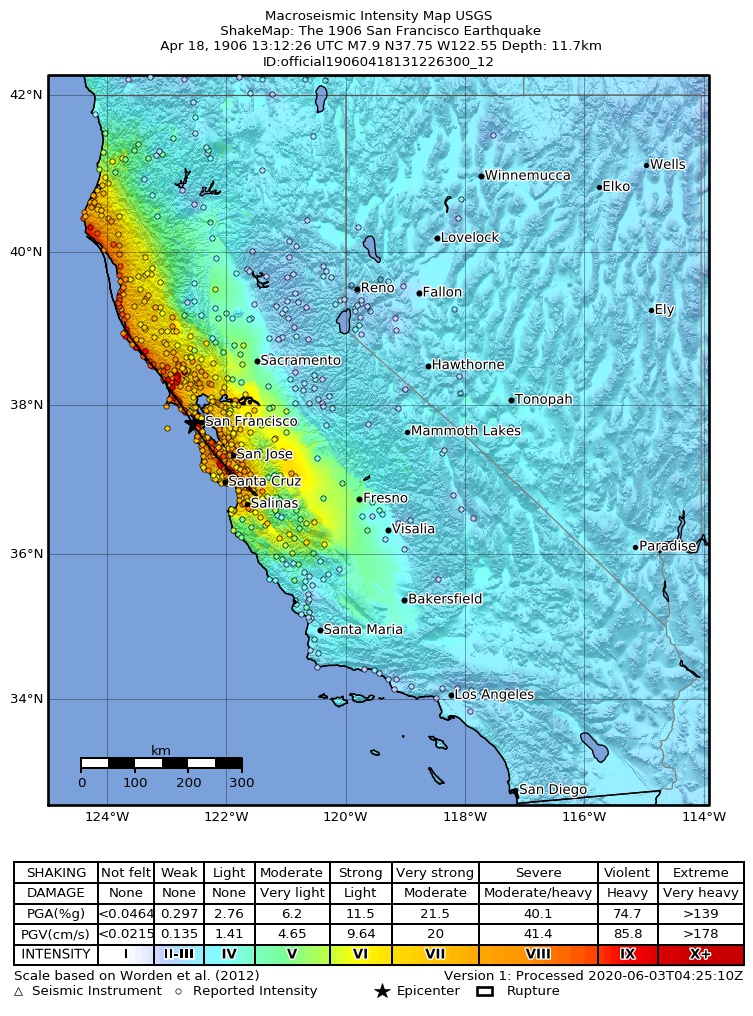
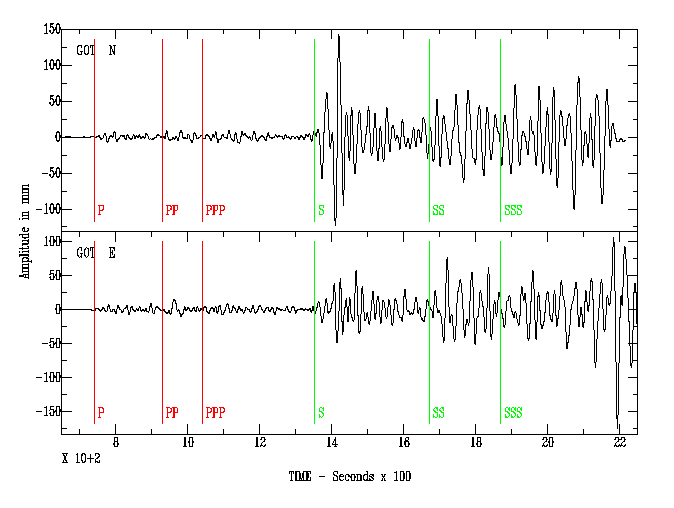
On the morning of Wednesday, April 18, 1906, at precisely 05:12 Pacific Standard Time, a powerful rupture tore through the San Andreas Fault, releasing energy equivalent to a magnitude 7.9 on the modern moment magnitude scale, though estimates have ranged anywhere from 7.7 to 8.3. A strong foreshock struck roughly twenty to twenty-five seconds before the main shock, which then shook the region for approximately forty-two seconds. The rupture propagated in both directions along the fault, covering a total distance of about 296 miles, and the resulting shaking was felt from Oregon in the north down to Los Angeles in the south, extending as far inland as central Nevada. For decades, the epicenter was assumed to lie near Olema in Marin County, but a 1960s UC Berkeley seismologist proposed an offshore location northwest of the Golden Gate. A local tsunami recorded at the Presidio tide gauge, measuring roughly three inches in amplitude with a forty-to-forty-five-minute period, supported that offshore theory. In 2019, researchers combining an old photograph with an eyewitness account refined the hypocenter to offshore San Francisco or near San Juan Bautista, lending further credibility to the revised location.
Tectonic Context and Fault Mechanics
The San Andreas Fault is a continental transform boundary where the Pacific Plate slides northward past the North American Plate in a dextral, strike-slip motion. Stretching roughly 810 miles from the Salton Sea in the south to Cape Mendocino in the north, it traces the entire length of California. During the 1906 event, accumulated tectonic strain was released along a 280-mile segment of this boundary. Surface displacement measurements recorded a maximum offset of about twenty feet, while more precise geodetic surveys indicated shifts of up to twenty-eight feet. Triangulation data collected before and after the quake pointed to a rupture length of approximately 310 miles, a figure that aligns well with the observed intensity pattern. However, seismological data suggested a notably shorter rupture. Researchers reconciled this discrepancy by proposing that the rupture front traveled at speeds exceeding the S-wave velocity, a phenomenon known as supershear propagation, now recognized in many strike-slip earthquakes. The event also produced severe crustal deformations both before and after the main shock, underscoring the extraordinary energy involved in that single tectonic release.
Devastation and the Human Toll
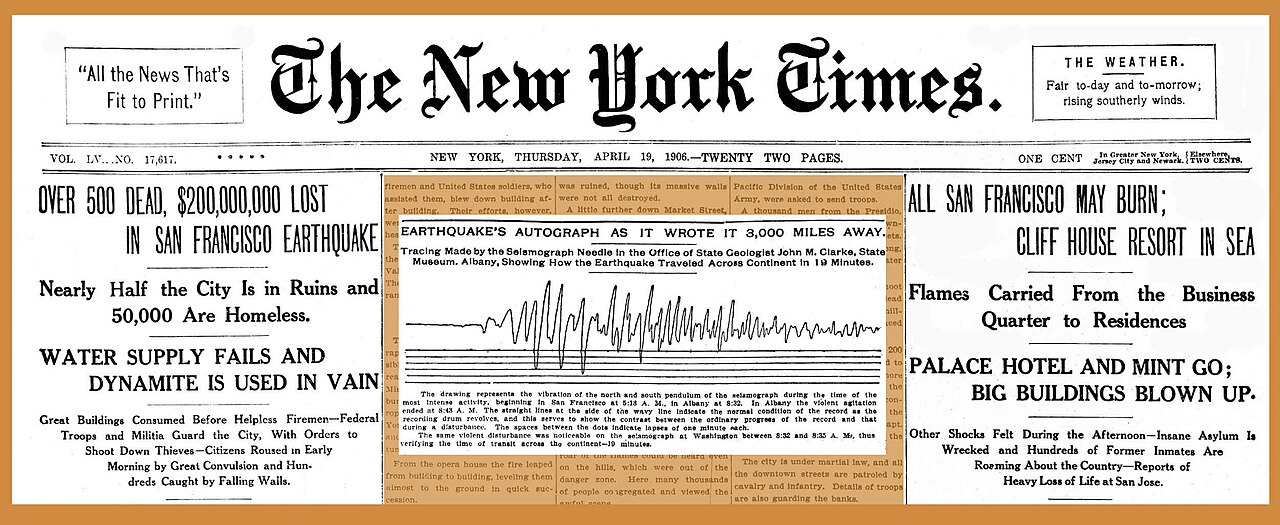
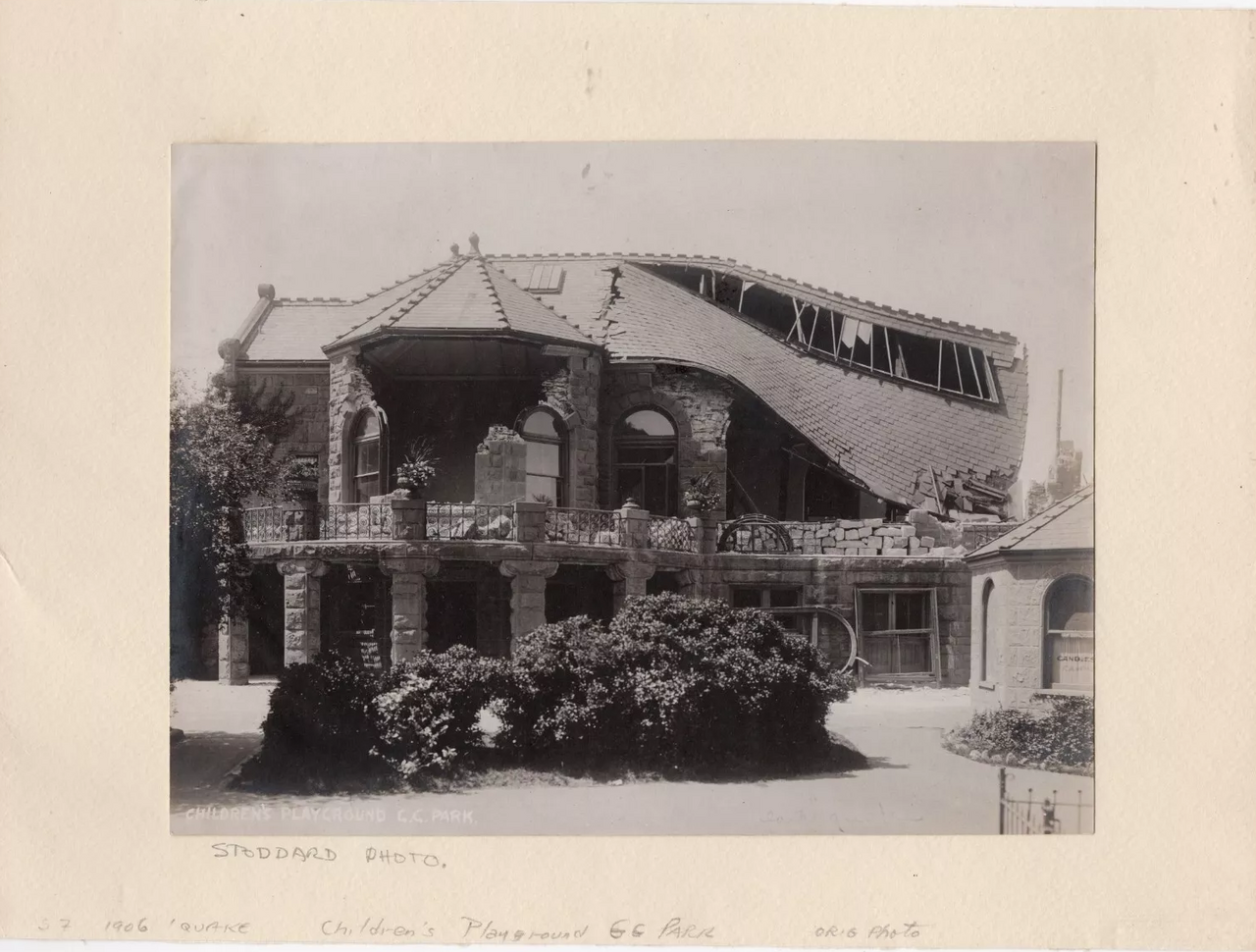
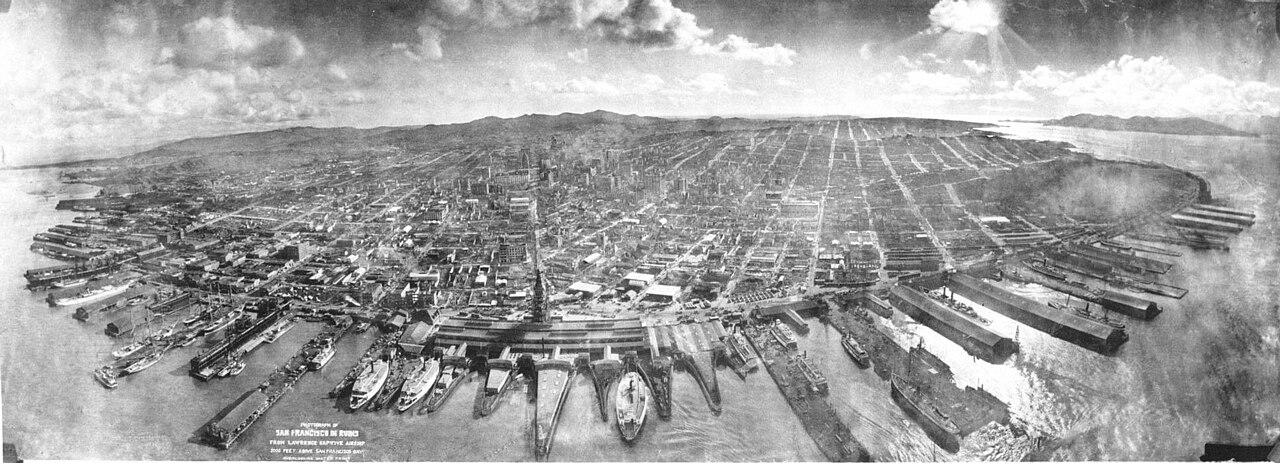
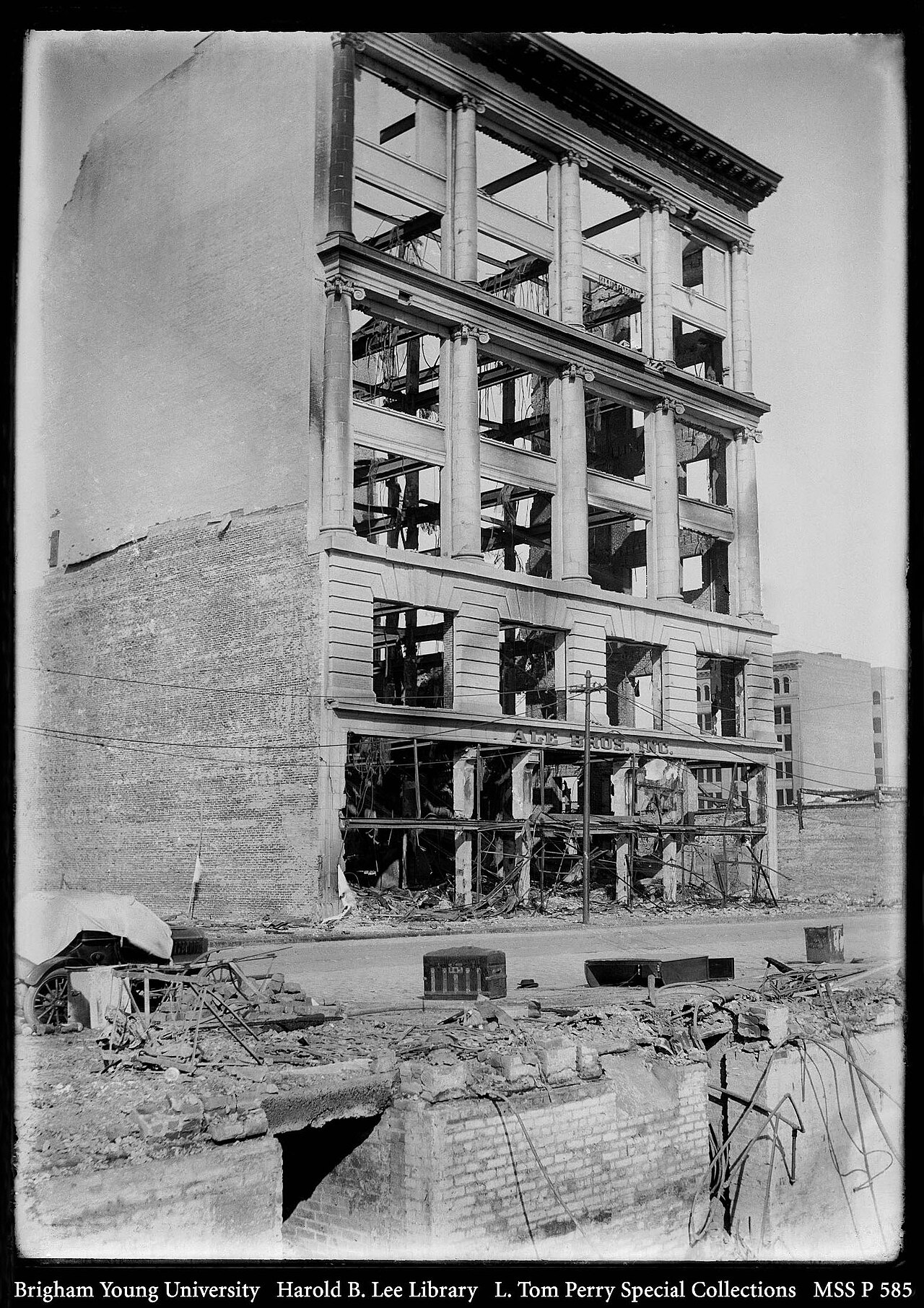
The earthquake's immediate destruction was compounded by massive fires that raged through San Francisco for several days, ultimately obliterating more than eighty percent of the city. The death toll remains one of the most contested figures in American disaster history. Early tallies ranged from 375 to over 500, but hundreds of fatalities in Chinatown were never recorded or acknowledged. Various reports over the decades presented a range from 700 to more than 3,000. In 2005, the San Francisco Board of Supervisors unanimously adopted a resolution, authored by novelist James Dalessandro and city historian Gladys Hansen, officially recognizing a toll of 3,000 or more. While the vast majority of deaths occurred within the city, an additional 189 were reported in other parts of the Bay Area, including Santa Rosa and San Jose. The Modified Mercalli intensity reached XI, the highest level, in San Francisco and northern areas like Santa Rosa, where destruction was equally devastating. Andrew Lawson's 1908 report highlighted a critical pattern: areas built on sediment-filled valleys and former bay floors experienced far stronger shaking than nearby bedrock sites, a finding that still shapes modern seismic zoning practice.
Aftershocks and the Broader Seismic Picture
In the weeks and months following the main shock, the region experienced a series of aftershocks, though notably fewer than would typically be expected for a rupture of that magnitude. Rather than clustering along the 1906 rupture trace, most aftershocks concentrated near the ends of the break or on separate structures such as the Hayward Fault. The first significant aftershock, around magnitude 4.9, struck near Santa Cruz on the afternoon of April 18. The largest, estimated at magnitude 6.7, occurred on April 23 west of Eureka, with another of similar size not appearing until October 28, more than three years later, near Cape Mendocino. The 1906 event also triggered seismic activity far from the fault: a swarm in the Imperial Valley culminated in a 6.1 quake on April 18, and a 5.0 event shook beneath Santa Monica Bay on April 19. Looking further back, decades of minor earthquakes preceded the main event, more than at any other period in northern California's recorded history. Once thought to be precursors, these tremors have since been linked to seasonal sediment loads in coastal bays, much of it erosion debris left behind by hydraulic gold mining in the late nineteenth century.
Gallery
Frequently Asked Questions
When exactly did the San Francisco earthquake of 1906 strike?
The main shock occurred at 5:12 a.m. Pacific Standard Time on a Wednesday, April 18, 1906. Most residents were still asleep, which is widely believed to have spared even more lives.
What destroyed most of San Francisco in 1906?
The initial 7.9-magnitude rupture cracked gas lines, toppled chimneys, and severed electrical wires, igniting dozens of fires that burned out of control for several days. Combined, the shaking and the resulting blazes razed over 80 percent of the city's structures.
Why is the San Francisco earthquake of 1906 considered so significant?
It holds the record as the deadliest earthquake ever recorded in United States history and remains California's single greatest natural-disaster loss of life. The event also reshaped the city's infrastructure, building codes, and emergency-response planning for generations to come.
More in Natural Disasters 1-15
Spotted an error? Know more?
This is a living reference — every entry is fact-audited, and reader corrections feed straight into our audit queue. Suggest an edit · See this site's audit record